Administration
This course explores the role of government in childcare. A further examination will lead the student to view the role of the director and the owner in relation to running the childcare business, how to be a leader, how to create goals and promote professionalism.
Infants and Toddlers
This course focuses on the growth, care and education of infants and toddlers. The age range explored is from neonatal up to the age of three. It is suggested that all who interact with young children try to get into the conscious world of the children, recognizing their levels of alertness and reading their cues. What is most important is to acquire the skill of being with children rather than doing to children.
Autism Intervention
The number of cases of children with autism is increasing worldwide. Autism is recognized as one of the most common neurological disorders affecting Canadian children and is one of the most common developmental disabilities. In this course, you will gain an understanding of what autism is and the challenges and difficulties that are faced by a child with ASD. We will focus on teaching children with ASD in the areas of communication, social skills, self-monitoring and also how to deal with challenging behaviours.
Preschoolers
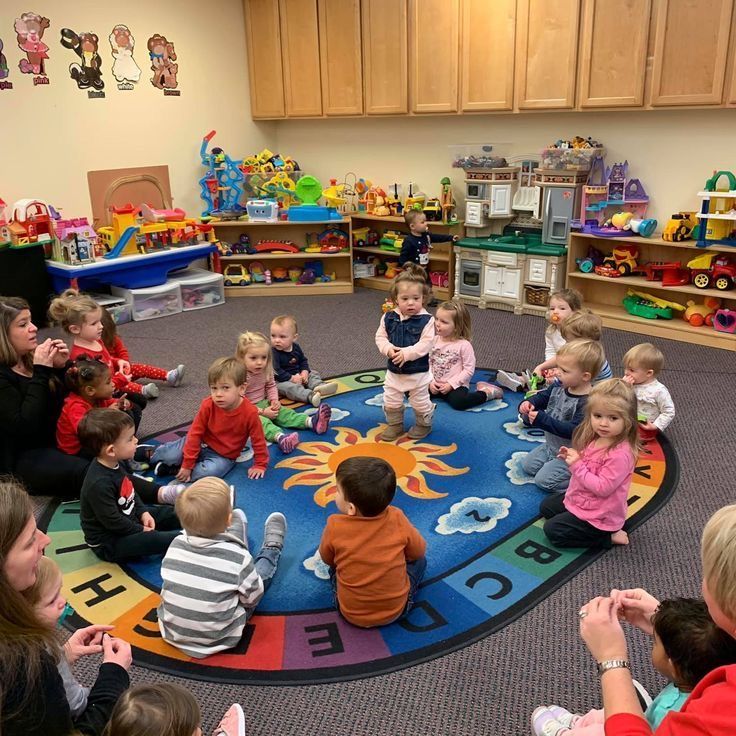
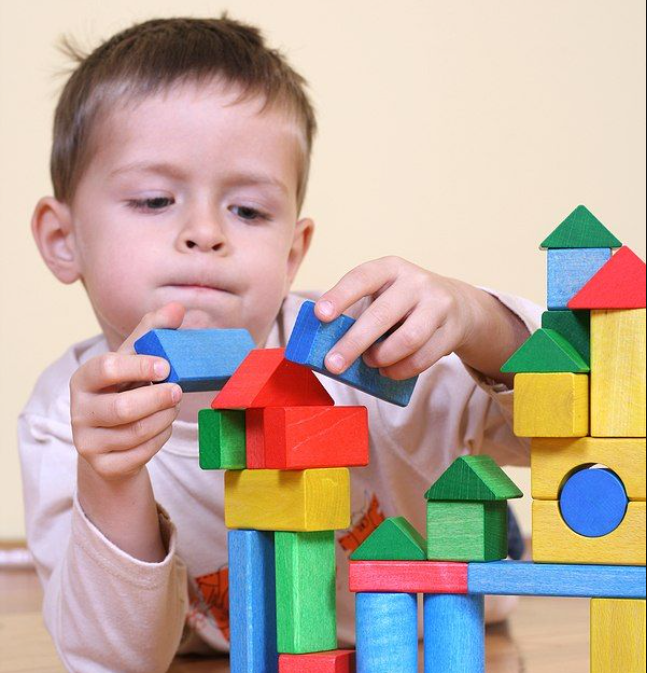
Play is primarily intrinsically motivated. What is fun really all about? To limit children’s play and to over-organize it is to take away children’s major means of gaining self-confidence in the preschool years. We need to observe children as they play and build curriculum that’s appropriate for each child from what we see and hear. Intellectual development occurs through play.
Child Development
Child Development explores the question of how individuals change or remain the same over time, and what factors contribute to this continuity and change. We begin by examining some of the early theories of child development and how these theories have changed over the past several hundred years. The physical, cognitive, social and emotional development of children from the prenatal stage up to the age of five will also be explored.
Curriculum Development
This course will provide students with the opportunity to acquire the skills, knowledge and confidence to set up an optimum learning environment that is very practical. There are many things to consider for children’s areas of learning: sound, lighting, color, noise, functional aspect of space, storage of equipment and types of learning involved during each phase of the day. This course will help students become more able to incorporate all of these and many other concepts into a child’s learning environment and schedule.
Child Guidance
This course is based on the case study approach. Each chapter opens with a case study which provides rich examples of potential behaviour problems and possible positive solutions. This course focuses on positive and authoritative child guidance, based on principles of Developmentally Appropriate Practice or DAP.
School Age Children
This course offers a logical progression of experiences and suggestions for creating an optimum environment for school-age children. Concepts that will be examined are the characteristics of school-age children and optimal learning conditions for this age group. Students will also view ways to help them learn how to assist children in various competencies throughout different stages of childhood. Students will also practice creating and leading activities that will add to their repertoire of ideas for school-age children.
Health & Safety
This course provides an important framework for looking at health promotion with childcare providers and teachers. Students will find health information and support essential for professionals who interact with children.
Children with Exceptionalities
This course provides an introduction to the education and care of children with special needs. Children are not characterized by their exceptionalities. Rather, an understanding of each child’s strengths, abilities, and developmental needs is used as a basis for inclusive program planning. This course focuses on an approach to support, encourage, and respond to the developmental needs of all children. Information is provided to enable providers to feel comfortable teaching children with special needs and to be successful integrating them into classroom programs.
Observation & Assessment
Students will learn to maintain a close relationship between observing, understanding what one observes and improving your curriculum and environment. Observation is one of the most important ways to obtain pertinent and critical information about children, the environment, the curriculum and your teaching style.
Communication
Communication is not a collection of techniques we use on others; it is a process we engage in with them. This course will look at differences and similarities between male and female communication; both verbal and nonverbal. It will also provide information for effective communicating skills, both sending and receiving.
Professional Development
This course will provide students with the opportunity to acquire the skills, knowledge and confidence to determine the proper behaviour that should be practiced when dealing with difficult situations. Student’s main responsibility is for the care and reasonable guidance for all children. Students will reflect upon and review various roles and responsibilities of their position to better understand their best choice of outcomes in possible problematic areas. Review of updated protocols, rules, regulations and standards available for early childhood education work. Having occupational standards in the work place is the norm and students will review, reflect and discuss those ideas.
Working with Families
This course aims to help childcare providers meet the needs of diverse families. More and more families need help from many perspectives to remain healthy and keep stress levels low. Roles of mothers and fathers are always changing and childcare providers need to know how to foster positive communication for all situations. We are all responsible for children and families.
Adolescent Development
This course will help students understand the bases of changes an adolescent will go through. Adolescents need to be appreciated for the diversity of themselves, their families, communities and cultures that all work together to help make them who they are.
Final Assessment
This project encompasses many concepts covered throughout the entire program. Students will reflect on practices learned, and during the completion of this project will focus their thoughts on ideas presented in class, learned during discussions and researched for study purposes. This final assignment will allow students to bring all learned areas together in a complete work to finish their program.
Work Placement 5-weeks
As part of the program, students participate in a five-week On-The –Job Training program divided into one three-week term and one two-week term.
Intro to Computers/Keyboarding/Word
This course is designed to assist students in mastering the alphabet and numeric keyboard, speed and accuracy and formatting of letters and memos. Instruction is also offered in computer functions, terminology and structure. Current software packages such as Microsoft word and Outlook are used.
Food Safety
Canadian Restaurant & Foodservice’s National Food Safety Training Program – this nationally recognized training program is designed to provide food safety training and certification to ensure food handlers have the information they require to prepare and serve safe food.